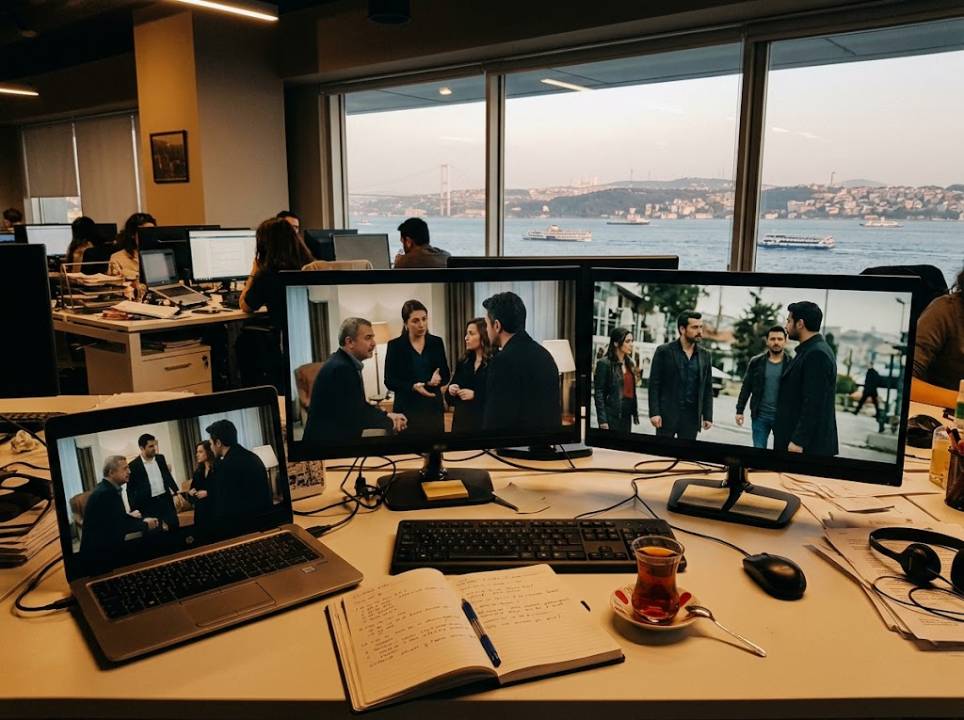
A decade ago, a Turkish drama on a Wednesday evening was mostly a domestic affair. Today, the same episode can trend in Madrid, Cairo and Buenos Aires within hours. For anyone who follows Turkish news, the rise of the dizi is no longer entertainment gossip. It is a business story, a diplomacy story and a media story at once.
This article looks at why Turkish series travel so well, what the industry numbers suggest, and why the quiet work behind the screen, translation and subtitling, decides whether a show finds an audience abroad.
From Istanbul studios to prime time worldwide
Turkish television drama grew up on long seasons, strong family plots and polished production. Studios in Istanbul learned to produce at a pace that few other countries match, and broadcasters soon realised that the finished episodes could be sold far beyond Turkey.
According to the overview on Turkish television drama, the genre has become a major cultural and economic export, with series enjoying worldwide popularity.
The first lesson for news readers is simple: a series is an export product, and exports follow the same rules as any other trade.
Why the stories cross borders so easily
Most popular dizi share a few ingredients. They focus on love, loyalty, class and family honour, themes that need no local background knowledge. Episodes run long, so viewers spend a full evening with the characters. Settings such as the Bosphorus, Cappadocia or a family mansion give the shows a recognisable look.
Dubbing and subtitles do the rest. A well localised series feels native in Arabic, Spanish or German. A badly localised one loses jokes, tension and cultural meaning within the first ten minutes.
What this means for Turkish media coverage
Turkish newsrooms now cover series the way they cover football transfers. Rating figures, casting changes, international sales and festival awards all appear in the daily headlines. Local readers want to know which show is selling abroad, and international readers want to know why a particular actor is suddenly famous in their country.
That second group is growing fast. Many of them read Turkish sources through machine translation, which handles simple sentences but often fails on idioms, titles and names. A headline that says a series "conquered" a market can end up sounding like a military report if the nuance is lost.
Translation is part of the production chain
Behind every successful export sits a translator. Scripts must be adapted, character names handled consistently, and on-screen text turned into something readable in a few seconds. Agencies that offer subtitling services work with native speakers who know the difference between a literal rendering and a version that actually plays well on screen.
For news and media companies the same logic applies. A press release, an interview or an investor note about a series sale needs careful handling. One wrong term can change a contract detail or embarrass a spokesperson.
Healthcare follows the same pattern. Turkey's clinics treat large numbers of patients from abroad, and those patients usually meet the clinic first through a translated website, a treatment page or a consultation summary in their own language. When that wording is vague or wrong, trust disappears just as quickly as it does with a bad subtitle, which is why international clinics invest in medical translation services and multilingual content written for the reader, not just converted word for word. The series boom simply makes the lesson visible: whatever the product, careful language is what turns foreign interest into a decision.
When subtitles change the story
Subtitling is the most visible and the most unforgiving part of localisation. Viewers read text while the actors speak, so errors are noticed immediately and shared online. Humour, regional dialects and polite forms of address are the usual trouble spots in Turkish, where a single word can carry a family relationship that English has no short term for.
The streaming era has produced many examples of subtitle errors that changed a plot point or turned a serious scene into an unintended joke. Those cases are a useful reminder that low cost and low quality tend to travel together.
What viewers and readers can look for
If you follow Turkish series or Turkish news from abroad, a few habits help. Compare two translations of the same headline when a story matters to you. Treat unusual phrasing as a sign that something was lost. Look for outlets that name their translators or editors, because accountability usually improves quality.
Publishers can do their part by treating translation as editorial work rather than an afterthought. A short review by a native speaker before publication costs little compared with a public correction.
The outlook for the industry
Production companies are now planning series with global audiences in mind from the first script draft. Shorter seasons, international co-productions and multilingual marketing campaigns are becoming normal. Each of those steps creates more text to translate, more voices to dub and more subtitles to check.
The Turkish series boom shows how quickly a local product can become a global conversation. Whether it keeps growing will depend as much on the quality of the words that accompany the pictures as on the pictures themselves.
For readers of Turkish news, the point is clear. The stories that shape the daily headlines increasingly start on a screen in Istanbul and finish in a living room thousands of kilometres away, with a translator somewhere in between.